
The honest PTO strategy
San Pedro de Atacama sits at 2,400 meters above sea level in northern Chile, surrounded by dramatic salt flats, high-altitude canyons, and 5,000-meter Andean peaks. For U.S.-based working professionals, the primary advantage of this destination is timezone alignment: in October, Santiago and Atacama sit on Chile Standard Time (UTC-3), which is just one hour ahead of U.S. Eastern Daylight Time. You get high-reward alpine desert scenery with virtually zero jet lag.
To execute this trip efficiently, build around the Columbus Day federal holiday weekend. Take Thursday, October 8 and Friday, October 9 as your 2 PTO days. Combined with Saturday, October 10, Sunday, October 11, and Monday, October 12 (Columbus Day), you create a 5-day calendar window away from work while consuming only 2 days of vacation time.
Here is how the calendar and transit math breaks down:
- Free base window: 3 days (Saturday, Sunday, Monday federal holiday)
- PTO days requested: 2 days (Thursday, Oct 8 and Friday, Oct 9)
- Total calendar days away: 5 days
- Transit days consumed: 2 days (overnight outbound Thursday; afternoon/overnight return Monday)
- Usable days on the ground: 3 full days plus arrival and departure tails
- PTO leverage: 5 total calendar days away for 2 PTO days spent (2.5x multiplier)
Depart the U.S. on a red-eye flight Thursday evening. Connect through Santiago (SCL) on Friday morning to reach Calama (CJC) by early afternoon. A 60-minute ground transfer brings you to San Pedro de Atacama by mid-afternoon on Friday, giving you an evening on the ground.
Your return begins late Monday afternoon with a flight from Calama back to Santiago, connecting to an overnight flight to the U.S. that lands early Tuesday morning. You can realistically be back at your desk on Tuesday without taking additional time off.
Why visit
San Pedro de Atacama offers some of the most dramatic geological terrain in South America. The landscape transitions rapidly from baked sandstone valleys and salt crusts to turquoise altiplanic lagoons framed by active volcanoes.
For active travelers, the draw is high-altitude terrain without requiring a two-week expedition. You can spend your morning scrambling through canyon riverbeds at 3,200 meters, soak in natural geothermal hot springs at mid-day, and observe deep-sky astronomical phenomena at night under some of the clearest skies on Earth.
Because the flight south stays within the same general meridians as the U.S. East Coast, your body clock remains unaffected. Unlike flying to the European Alps or the Himalayas, you do not spend three days adjusting your sleep cycle before stepping onto the trail.
Suggested itinerary
Structuring high-altitude day hikes around desert bases requires a strict elevation progression. Starting too high on Day 1 risks altitude sickness that can derail a short turnaround trip.
Day 1 (Friday): Arrival and Low-Altitude Acclimatization
Land at El Loa Airport in Calama (CJC) early Friday afternoon and take your pre-booked shuttle directly to San Pedro de Atacama (~2,400 meters). Check into your hotel, hydrate, and keep physical exertion light.
In the late afternoon, head to Valle de la Luna (Valley of the Moon), located just 15 minutes outside town. The valley floor sits between 2,400 and 2,600 meters, making it the ideal location for your first afternoon. Walk along the sculpted red sandstone ridges and quartz formations as the sun sets over the Cordillera de la Sal.
Return to town for dinner and book an introductory stargazing tour for late evening if cloud cover permits. Maximizing night sky observations without adding calendar days means booking your stargazing on the first available clear evening to leave backup slots for subsequent nights.
Day 2 (Saturday): Mid-Elevation Canyon Hike and Thermal Springs
Begin your elevation progression by moving to mid-altitude terrain (~3,200 to 3,500 meters).
In the morning, travel to Guatin Canyon, also known as Cactus Valley (~3,200 meters). The trail follows a rocky riverbed carved through volcanic rock, flanked by massive cardon cacti, some of which stand over seven meters tall. The hike involves moderate boulder scrambling alongside the stream bed, providing a solid physical workout while your red blood cells adapt to reduced oxygen.
After completing the hike, continue up the canyon to Puritama Hot Springs (~3,500 meters). A series of eight geothermal pools are terraced inside a steep, grassy ravine. Spend two hours soaking in the thermal waters (typically 28°C to 33°C / 82°F to 91°F) to rest your legs and allow your body to adjust to mid-elevation air pressure.
Return to town by late afternoon. Keep your evening low-key with a light dinner in San Pedro.
Day 3 (Sunday): Altiplanic Lagoons and Salt Flats
Push higher into the Andean plateau to test your adaptation at ~4,000 meters.
Depart early for the Altiplanic Lagoons (Miscanti and Miñiques), situated at roughly 4,200 meters above sea level. The trail here is largely flat, winding between twin high-altitude lakes framed by dark volcanic peaks. The air is noticeably thin, but flat walking allows for active recovery while experiencing high altiplano scenery.
Continue to Piedras Rojas (Aguas Calientes Salt Flat), where oxidized red stone deposits contrast sharply with bright turquoise lagoon waters and white salt crusts. Expect cold winds across the exposed flat, so keep your windproof shell easily accessible.
Return toward San Pedro in the afternoon, stopping at the Chaxa Lagoon inside the Reserva Nacional Los Flamencos to view Andean and James's flamingos feeding in the saline shallows.
Day 4 (Monday): High Summit Challenge and Departure
For well-acclimatized hikers, use your final morning to attempt a high-altitude peak. Cerro Toco is a non-technical summit rising to 5,604 meters, accessed via a dirt road that ends near an old sulfur mine at 5,000 meters.
Depart San Pedro by 5:00 AM with a certified local guide. The hike ascends approximately 600 vertical meters over two kilometers of loose scree and rocky switchbacks. Due to thin air at 5,500+ meters, movement is slow and deliberate. Reaching the summit yields panoramic views across the Bolivian border, including the conical silhouette of Licancabur volcano.
Note: If you experience symptoms of acute mountain sickness (persistent headache, nausea, dizziness) on Days 2 or 3, substitute the summit push with a low-elevation morning hike through Valle de la Muerte or an early morning trip to El Tatio Geysers (~4,300m).
Return to San Pedro by 1:00 PM, pack your gear, and meet your 3:00 PM shuttle transfer to Calama Airport for your evening flight out.
Day 5 (Tuesday): Return Landing
Touch down at your home airport early Tuesday morning, ready for the workday.
Where to stay
San Pedro de Atacama is a compact oasis town constructed largely of mud-brick adobe buildings. Staying within walking distance of Caracoles Street (the main pedestrian strip) makes logistics straightforward for short stays.
- Mid-Range Base (In-Town): Look for traditional adobe hotels or boutique lodges near the town center. Options in this tier typically offer quiet inner courtyards, shaded verandas, and daily breakfast served early enough to accommodate 5:00 AM tour departures. Expect basic amenities paired with solid regional design.
- High-End Adventure Lodges: Located slightly outside the main village grid, high-end adventure lodges operate on an all-inclusive model that covers direct airport transfers, private guided hikes, high-end regional dining, and open-air spa pools. For a compressed 5-day Atacama trip using 2 PTO days, paying for bundled logistics can save significant planning time.
Food & drinks
High altitude and desert dry air slow down digestion and increase dehydration rates. Adapt your eating and drinking schedule to match the environment.
- Hydration Strategy: Drink at least 3 to 4 liters of water per day, supplementing with electrolyte powder tablets. Tap water in the desert contains mineral deposits and should not be consumed; buy large gallon jugs at local markets to refill reusable flasks.
- Regional Specialties: Local menus emphasize northern Chilean produce, including patasca (a hearty corn and meat stew cooked in the Andes), roasted llama steaks, corn-based humitas, and dishes flavored with local herbs like rica-rica and muna-muna.
- Dining Practicalities: Most casual restaurants open for lunch between 12:30 PM and 3:30 PM, and dinner from 7:30 PM onward. For early morning hike starts, request a packed breakfast box (desayuno para llevar) from your hotel front desk the evening before.
Transportation
Evaluating flight connections through Santiago to Calama requires attention to layover windows. Your long-haul flight from the U.S. lands at Santiago International Airport (SCL) in the early morning.
- Connecting in Santiago: You must clear Chilean customs, retrieve any checked baggage, transition from the international terminal to the domestic terminal, and clear domestic security. Allow a minimum connection time of 2.5 hours for your Santiago layover to make your domestic LATAM or Sky Airline flight to Calama (CJC).
- Calama to San Pedro Transfer: El Loa Airport in Calama is located approximately 100 kilometers (60 miles) from San Pedro de Atacama. Pre-book a seat on a shared transfer shuttle (such as TransVip or Licancabur), which costs around $20 to $35 USD each way and meets incoming domestic flights directly. The driving time across the flat desert basin takes roughly 60 minutes.
- Local Transport: Once in San Pedro, the town is fully walkable on foot. Transport to trailheads and high altiplano sites is best handled by registered tour operators or private mountain guides who provide 4x4 vehicles equipped with emergency oxygen tanks.
Budget
Costs for a 5-day Atacama itinerary vary based on whether you book self-guided day trips or contract an all-inclusive adventure lodge.
- Airfare: Round-trip international flights from major U.S. hubs to Santiago typically run $800 to $1,400 USD. The domestic round-trip ticket from Santiago to Calama adds $60 to $180 USD when booked in advance.
- Ground Shuttles: Shared airport shuttle transfers between Calama and San Pedro run $40 to $70 USD round-trip per person.
- Accommodation: Mid-range boutique hotels range from $130 to $250 USD per night. High-end inclusive lodges range from $600 to $1,200 USD per night.
- Park Fees and Excursions: Entrance fees to indigenous-managed reserves (Valle de la Luna, Puritama, Altiplanic Lagoons) cost between $10 and $35 USD per location, often requiring advance online reservation. Guided high-altitude peak climbs (such as Cerro Toco) cost between $100 and $180 USD per person.
Best time to visit
October brings favorable spring conditions across the Atacama Desert, making it an ideal window for active hiking itineraries over the Columbus Day holiday.
- Temperatures: Daytime temperatures remain comfortable for hiking, ranging between 20°C to 25°C (68°F to 77°F). Nighttime temperatures drop rapidly once the sun sets, frequently reaching 0°C to 5°C (32°F to 41°F). Pack thermal base layers, a down jacket, and windproof pants.
- Wind: Thermal afternoon winds are common across open desert plains in spring. Plan your high-ridge and mountain hikes for early morning hours when wind speeds are lowest.
- Lunar Cycles: Stargazing clarity depends heavily on the phase of the moon. Bright light near a full moon washes out deep-sky nebulas and the Milky Way core. Check the lunar calendar when planning your evening astronomy excursions.
Final thoughts
A 5-day Atacama trip using 2 PTO days delivers maximum wilderness impact for minimal workplace disruption. By leveraging matching timezones, an overnight flight schedule, and a structured altitude progression, you can tackle 5,000-meter Andean peaks and world-class desert landscapes over a standard holiday weekend.
Gallery
PTO Escape standard
PTO Strategy
- Trip length (days away)
- 5 days
- Trip dates
- October 8–12
- Weekend
- Saturday, October 10 – Sunday, October 11
- PTO required
- 2 days
- Workdays to book off
- Thursday, October 8 · Friday, October 9
- Best departure
- Thursday, October 8
- Best return
- Tuesday, October 13
- Suggested travel window
- Thursday evening – Tuesday morning
- You land
- Friday
- Transit days
- 2 days
- Usable days on the ground
- 3 days
5 days away — 2 PTO days, 2 weekend days, 1 holiday day, 2 transit days — and 3 days usable on the ground.
Where you fly from matters: Best suited for US East Coast hubs (MIA, JFK, ATL) offering direct overnight flights to Santiago (SCL) with short domestic connections to Calama (CJC).
Booking Thursday and Friday off ahead of Columbus Day turns 2 PTO days into a 5-day expedition block. Overnight flights between the US East Coast and Chile preserve daylight hours in the Atacama Desert with virtually zero jet lag.
Holiday optimization
Columbus Day / Indigenous Peoples' Day (Monday, October 12)
Photo credits
- A traditional market hall in Chile featuring stalls laden with blocks of local cheese. — McKay Savage from London, UK, CC BY 2.0 via Wikimedia Commons
- Reeds line the edge of a peaceful pond in southern Chile surrounded by lush trees and timber buildings. — Alexmrz, CC BY-SA 4.0 via Wikimedia Commons
- A long central street stretches through a small town flanked by rows of trees and distant hills. — Camila Eyzaguirre, CC BY-SA 3.0 via Wikimedia Commons
- A takeout container filled with fried potatoes topped with a fried egg, peppers, and chives. — T.Tseng, CC BY 2.0 via Wikimedia Commons
- The illuminated Bellas Artes metro station sign standing along a street in Santiago at dusk. — Chris Martin from Santiago, Chile, CC BY 2.0 via Wikimedia Commons
- A fishmonger presents fresh seafood at a vibrant Chilean fish market. — Peretz Partensky from San Francisco, USA, CC BY-SA 2.0 via Wikimedia Commons
- A colorful mural featuring painted portraits covers a weathered brick exterior wall. — Rjcastillo, CC BY-SA 4.0 via Wikimedia Commons
- A metallic town sign and sailboat sculpture stand along the waterfront promenade in Algarrobo. — Capturartelab, CC BY-SA 4.0 via Wikimedia Commons
- A variety of fresh fish and scallops on display at a seafood stall in Chile. — David Berkowitz from New York, NY, USA, CC BY 2.0 via Wikimedia Commons
- Historic architectural ruins stand beside a curved modern building in urban Santiago. — Alex Proimos from Sydney, Australia, CC BY 2.0 via Wikimedia Commons
- Traditional wooden shingled architecture along a coastal street in Chiloé. — littletroll, CC BY-SA 3.0 via Wikimedia Commons
- Intricate ironwork and timber ceiling panels form the roof of a historic market hall. — User:W.Pfahler, CC BY 3.0 via Wikimedia Commons
- Vendors set up floral displays along a sidewalk market in Chile. — Bureau of Public Roads, Public domain via Wikimedia Commons
- A historic Chilean State Railways steam locomotive on display near the waterfront. — Leonora (Ellie) Enking, CC BY-SA 2.0 via Wikimedia Commons
- Shelves stocked with snacks and drinks inside a convenience store in Chile. — Oscar Zapata, CC BY-SA 4.0 via Wikimedia Commons
- A bright blue entrance structure stands before the entrance to a local market in Chile. — José Joaquín Cortes, CC BY-SA 4.0 via Wikimedia Commons
- Exterior view of a convenience store facade in Chile. — ostranation, CC BY-SA 4.0 via Wikimedia Commons
Music credit
Video teaser music: “Summer Tropical House” by Music for Creators — Free Music Archive, licensed CC BY 4.0.
Related destinations
More PTO escapes
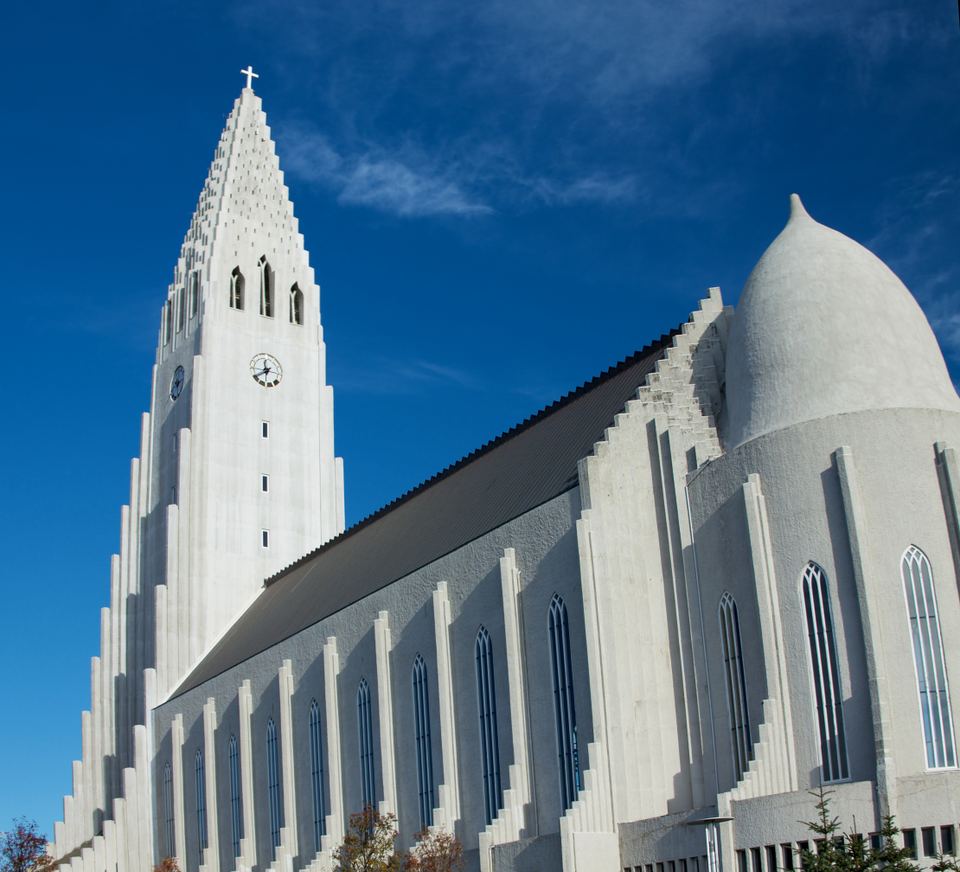
Iceland in 4 Days: The 1-PTO Thanksgiving Escape
Maximize 1 PTO day over Thanksgiving for a 4-day Iceland trip. Master 5-hour daylight windows, thermal lagoons, and the Golden Circle without burning vacation days.
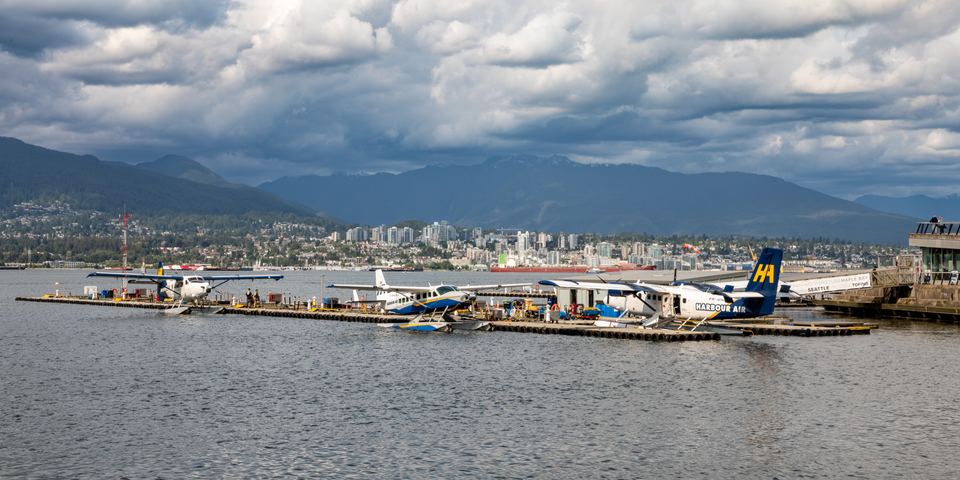
Vancouver and Whistler in 4 Days: The 1-PTO Fall Alpine Escape
How to convert 1 PTO day and Indigenous Peoples' Day weekend into a 4-day trip pairing Vancouver's coastal dining with Whistler's autumn mountain trails.
Montreal in 4 Days: The 1-PTO Labor Day Blueprint
Turn one single PTO day over Labor Day weekend into a four-day European-style urban break in Montreal with zero jet lag.