
I double-checked my passport, boarding pass, charger, and travel documents at least five times before stepping onto the plane. Taking an international trip over a short PTO break sounded ambitious for a newbie traveler like me, but as my flight crossed continents, excitement completely overwhelmed my nerves.
With just a few days of PTO, I set off to prove that a first-time European adventure in Madrid was entirely within reach.
The honest PTO strategy
Recommended trip length: 3 days on the ground PTO required: 2 days (Friday and Monday) Weekend included: Saturday + Sunday Suggested travel window: Thursday evening → Monday afternoon
Madrid is the cleanest transatlantic math available from the U.S. East Coast. An overnight flight leaves after work on Thursday and lands mid-morning on Friday, so no working hour is spent in the air on the way out. Friday, Saturday and Sunday are three complete days — enough for the capital plus two day trips. You fly home Monday morning and, thanks to the six-hour time difference, land the same afternoon.
Two PTO days. Three full days across three Spanish cities. That is the honest number: Friday and Monday are both real workdays, and no amount of clever routing removes them.
Pair it with a holiday and it costs one. Anchor the window to a Monday federal holiday — Presidents' Day, Memorial Day, Labor Day, Columbus Day or MLK Day — and the Monday is free. From the West Coast, add a day: the flight is long enough that three ground days start to feel expensive on two PTO days alone.
Why visit
Madrid is the European capital that asks the least of a short calendar. The overnight flight is six to eight hours from most East Coast hubs, the airport is thirty minutes from the centre by metro, and the city itself is walkable end to end.
What makes it a three-city trip rather than a one-city trip is the train. High-speed rail puts medieval Toledo thirty-three minutes away and Roman Segovia twenty-seven — both are genuine day trips, not compromises. You get a capital, a UNESCO hill town and a 2,000-year-old aqueduct in the space most itineraries give to a single city.
And the museums are among the best in Europe. The Prado, the Reina Sofía and the Thyssen sit within a ten-minute walk of each other on the same boulevard.
Suggested itinerary
Three full days: one for Madrid, one for the day trips, one for the art.
Friday (PTO day 1) — arrival and the classic squares
Arriving in Madrid, the cool air and unfamiliar language instantly reminded me that I was far from home. After checking into my hotel and freshening up, I stepped straight out onto the wide avenues to explore.
I started my walk at Puerta del Sol, soaking in the energy of street performers and bustling locals. From there, I wandered over to Plaza Mayor, framed by striking red historic buildings. I sat down for a moment to take in the atmosphere and devoured my very first authentic Spanish snack—a simple yet delicious bocadillo.
Tip: Don't be afraid to navigate the streets on foot as a newcomer. I found Madrid remarkably safe, walkable, and welcoming, and locals were always happy to point me in the right direction when I needed help.
After a short rest back at the hotel, I headed out after sunset to experience Madrid's famous evening culture. The energy along Gran Vía was electric, with illuminated theaters, bright lights, and bustling lounges filling the street.
I decided to try tapas for dinner, which quickly became my favorite way to sample different flavors. Ordering small plates of patatas bravas, jamón, and creamy croquettes allowed me to try so many iconic dishes in one sitting.
Time-saver: Keep in mind that Madrid runs on late hours. I was surprised to learn that restaurants don't get busy until around 9 PM, so pace your evening accordingly!
Saturday — Toledo and Segovia
One of the best decisions I made on this trip was taking advantage of Spain’s efficient transport system to venture outside the capital. I booked day trips in advance, which helped me maximize every single hour of my PTO.
Toledo: A Medieval Masterpiece
My first stop was Toledo, a UNESCO World Heritage site that felt like stepping straight into a history book. I spent hours winding through narrow cobblestone streets and marveling at ancient stone walls. The highlight for me was stepping inside the breathtaking Toledo Cathedral, surrounded by centuries of intricate architecture.
Segovia: Roman Engineering and Fairytale Castles
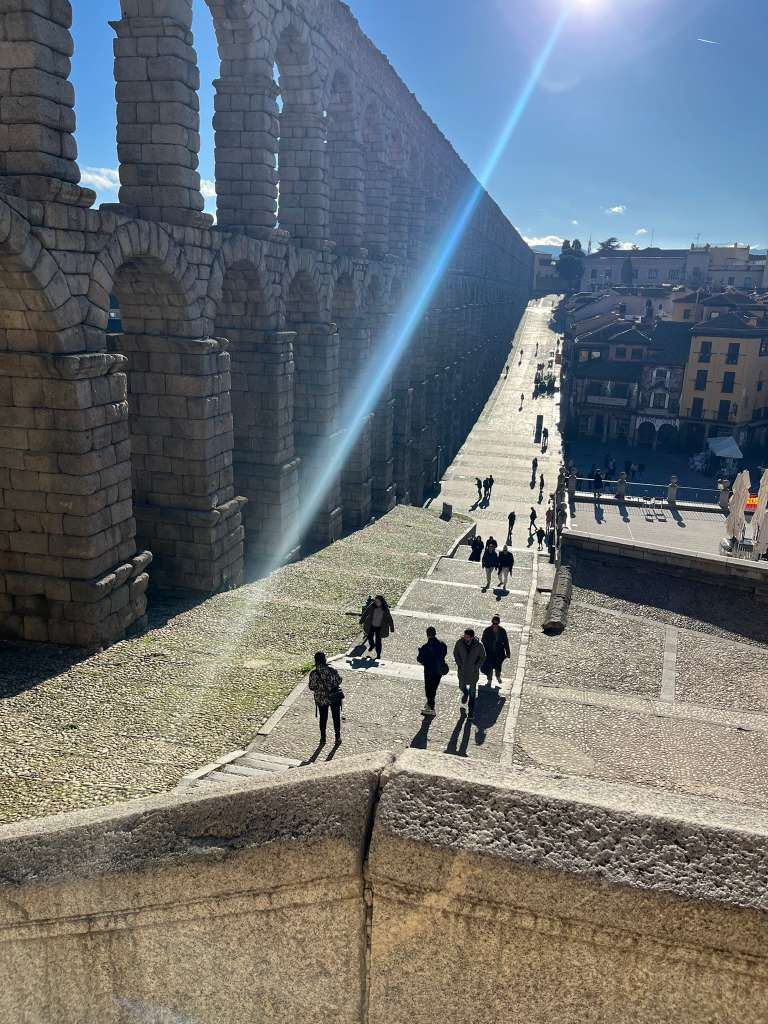
Next, I traveled to Segovia to stand before the colossal Aqueduct of Segovia. Seeing a nearly 2,000-year-old Roman marvel built without modern technology was surreal. Afterward, I hiked up to the Alcázar of Segovia, the fairytale hilltop castle that famously inspired Disney. The views from the top were worth every step of the climb.
Exchanging Madrid’s grand avenues for medieval cobblestones proved to be the ultimate single-weekend highlight.
Sunday — art, parks and a slow last day
On my last full day, I dedicated my remaining hours to Madrid’s art and green spaces. I visited the renowned Museo del Prado, spending a peaceful morning surrounded by European masterpieces. Even as someone new to art museums, I found the experience deeply inspiring.
In the evening I took a quiet stroll through Retiro Park, reflecting on everything I had seen.
Worth it: Learn a few basic Spanish phrases before you land. Locals deeply appreciated the effort, and it made ordering tapas at local counters much easier.
Monday (PTO day 2) — home before dinner
A morning flight out of Barajas and, thanks to the six-hour time shift, I landed home in the afternoon of the very same day — a mind-bending perk of transatlantic travel that still amazes me. Back at my desk Tuesday morning, having used two days of leave.
Where to stay
Stay central; the walking is the trip. Anywhere inside the Sol–Gran Vía–Prado triangle puts everything on this itinerary within twenty-five minutes on foot and both train stations one metro ride away.
- Sol and Plaza Mayor — the most convenient for three days, and the liveliest at night. $80–$130 a night.
- Malasaña or Chueca — a little cheaper, better bars, ten minutes further from the museums.
- Barrio de las Letras — the quietest of the three, and the closest to the Prado for a Sunday morning.
Three nights covers it: Friday, Saturday and Sunday, checking out for a Monday morning flight.
Food & drinks
Eat the way Madrid eats and the short calendar stops mattering.
- Tapas, in a crawl, not a sitting. Patatas bravas, jamón, croquetas — three bars, one plate each, standing up.
- Restaurants fill after 9pm. Anything earlier is a tourist room. Plan the evening around it rather than fighting it.
- A bocadillo de calamares near Plaza Mayor, once, for about €4.
- Mercado de San Miguel for the atmosphere, the smaller neighbourhood markets for the value.
- Cochinillo in Segovia on the day-trip day — the roast suckling pig is the reason half the city is there.
- Menú del día at lunch: three courses and a drink for €12–€15 across the city.
Transportation
Nothing on this trip needs a car.
- Airport to centre. Metro Line 8 from Barajas takes about thirty minutes and costs under €6. A taxi is a flat €33.
- Around Madrid. Walk. The metro is excellent for the two or three times you need it, at €1.50–€2 a ride.
- Toledo. Renfe Avant from Atocha, thirty-three minutes, around €14 each way. Book ahead for a Saturday.
- Segovia. Renfe Avant from Chamartín, twenty-seven minutes, around €13 each way, then a short bus into the old town.
- Booking both day trips in advance is what makes Saturday possible. Same-day tickets on a weekend sell out.
Budget
Three days across three Spanish cities came to roughly $1,140 per person, flights included — the figure in the destination table above.
| Line item | Three days |
|---|---|
| Roundtrip flight (US East Coast) | $620 |
| Accommodation (3 nights, central Madrid) | $240 |
| Food and drink | $180 |
| Museums and entries | $60 |
| Trains to Toledo and Segovia, metro | $40 |
| Total | $1,140 |
The flight is the variable. Shoulder-season fares from the East Coast sit around $450–$650; the same seat in July is closer to $900. Everything on the ground is cheap by Western European standards — the two high-speed day trips together cost less than a single museum day in London.
Best time to visit
April to June and September to October are the window. Warm days, cool evenings, and the terrace culture that makes a long-weekend trip feel twice as long.
- Spring (April–June) — the best of the year, with Toledo and Segovia comfortable to walk in the afternoon.
- Autumn (September–October) — equally good and slightly cheaper, with Retiro at its best.
- July and August — genuinely hot, often above 35°C, and half the city leaves. Avoid if the plan involves walking hill towns.
- November to March — cold, clear and the cheapest fares of the year. The museums do not care about the weather.
Final thoughts
As a first-time international traveler, this whirlwind weekend in Spain proved that ambitious international breaks are completely doable with smart planning. Wearing comfortable shoes, dining on small-plate tapas, and booking high-speed transport ahead of time made my brief getaway feel rich and effortless.
Madrid welcomed me with warmth and rich culture, sparking a newfound desire in me to explore the world—one weekend at a time.
Gallery
PTO Escape standard
PTO Strategy
- Trip length (days away)
- 4 days
- Weekend
- Saturday + Sunday
- PTO required
- 2 days
- Workdays to book off
- Friday · Monday
- Best departure
- Thursday evening
- Best return
- Monday morning
- Suggested travel window
- Thursday evening → Monday afternoon
- You land
- Friday morning
- Transit days
- 1 day
- Usable days on the ground
- 3 days
4 days away — 2 PTO days, 2 weekend days, 1 transit day — and 3 days usable on the ground.
Where you fly from matters: The math above is East Coast math: Madrid is a 7–8 hour overnight from the eastern U.S. From the West Coast the same routing runs 11–12 hours with a connection, and you should budget a third PTO day.
An overnight flight into Madrid spends no working hours in the air, the weekend carries the day trips to Toledo and Segovia, and the six-hour time shift lands you home Monday afternoon. Two PTO days buy three full days across three Spanish cities.
Holiday optimization
Anchor the Monday to a federal holiday — Presidents' Day, Memorial Day, Labor Day, Columbus Day or MLK Day — and the same three days cost a single PTO day.
Budget snapshot
- Transportation
- $620
- Accommodation
- $240
- Food
- $180
- Attractions
- $60
- Other
- $40
- Estimated total
- $1,140
Estimates per traveler, excluding shopping and souvenirs. Prices shift by season.
Why this trip works
A red-eye into Madrid and two easy day trips mean two PTO days cover three full days across three Spanish cities.
Quick facts
- Currency
- Euro (EUR)
- Language
- Spanish
- Time zone
- UTC+1 (UTC+2 in summer)
- Visa
- No visa for U.S., UK and Canadian passports for short stays
- Best time to visit
- April–June and September–October
- Typical flight
- 6–8 hours overnight from the U.S. east coast
Photo credits
- 3 Spanish Cities in 4 Days — Why Madrid is Europe’s Sharpest Long-Weekend Bet — PTO Escape archive
Music credit
Video teaser music: “Summer Tropical House” by Music for Creators — Free Music Archive, licensed CC BY 4.0.
Related destinations
More PTO escapes
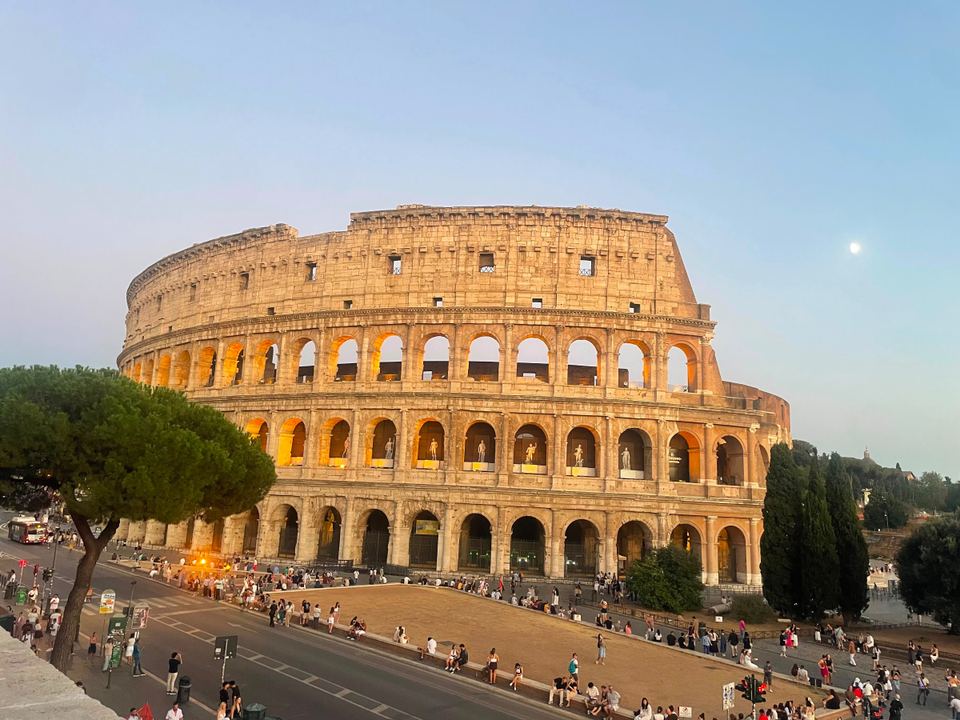
Rome Express: 4 Days in the Eternal City on Minimal PTO
A four-day itinerary through Rome and Vatican City designed for working professionals maximizing a weekend plus two PTO days.
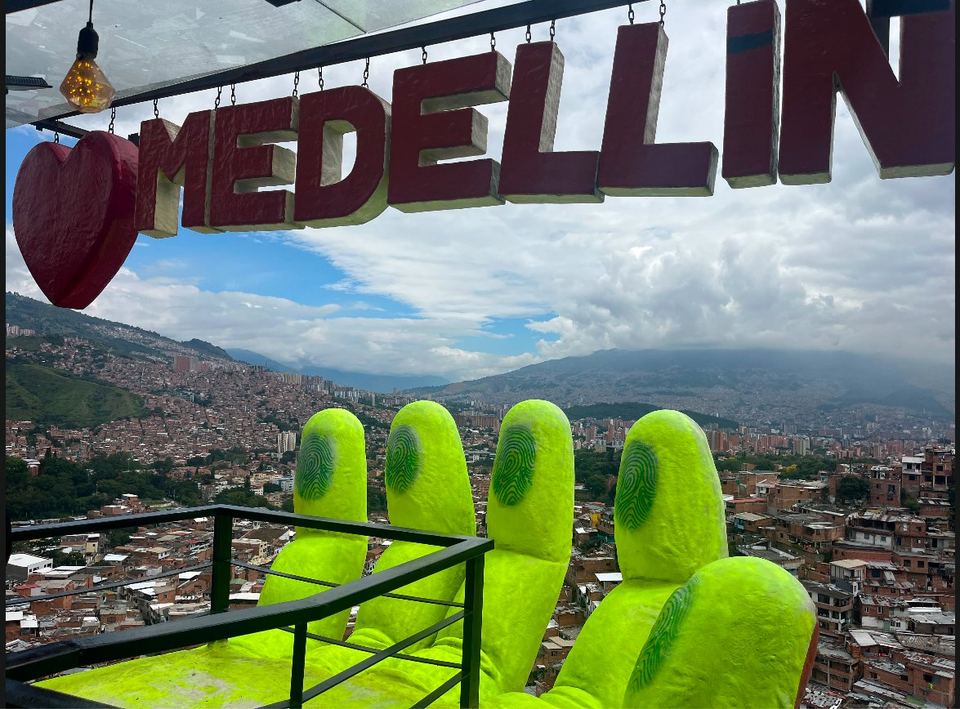
Medellín in 4 Days: A Two-PTO-Day Escape to Colombia's City of Eternal Spring
Medellín is the best two-PTO-day trip in South America: a short flight, zero jet lag, spring weather every month of the year, and four days that feel considerably longer than the calendar they cost.
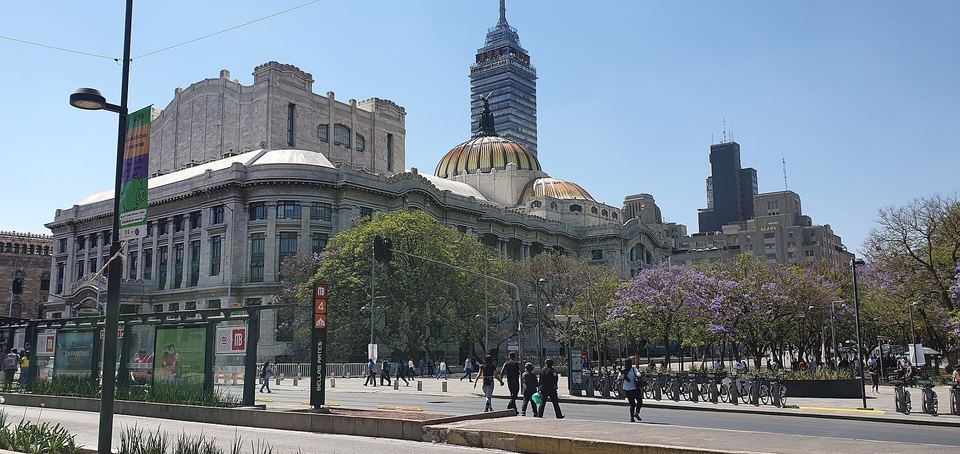
Mexico City in 4 Days: A Two-PTO-Day Escape That Feels Like Another Continent
Mexico City is the highest-value long weekend in North America: two PTO days, a short flight, no jet lag, and four days that feel like crossing an ocean.